
For over 15 years, I’ve been making order out of chaos and translating human and business needs into products people actually love to use.
Hey, I’m Tony. I’m a systems thinker who loves turning complex problems into simple, delightful experiences. Over the past 10 years at BambooHR, I’ve led zero-to-one product design across payroll, applicant tracking, and time tracking; in addition to building and evolving our design system and establishing design standards and patterns for a suite of products.Occasionally, I'll spend nights and weekends consulting for clients like ClientSuccess, Everwall, React Rally, and Blossom Smart Watering Controller (acquired by Scotts Miracle-Gro).If you have a project you'd like to chat about, please, get in touch.

These are a few of my favorite things
I've chosen a few of my favorite projects to highlight for you. If anything piques your interest, just let me know. I'd be glad to walk you through it.
The Fabric of our lives
Our design system, built from the ground up. Beautiful, composable components, comprehensive documentation, and a solid foundation for greater speed, efficiency, consistency, and scalability.
BambooHR

Encore: a visual refresh with purpose
A company-wide effort to retire our aging UI, modernize the visual language, and bring the product back in sync with who we are.
BambooHR
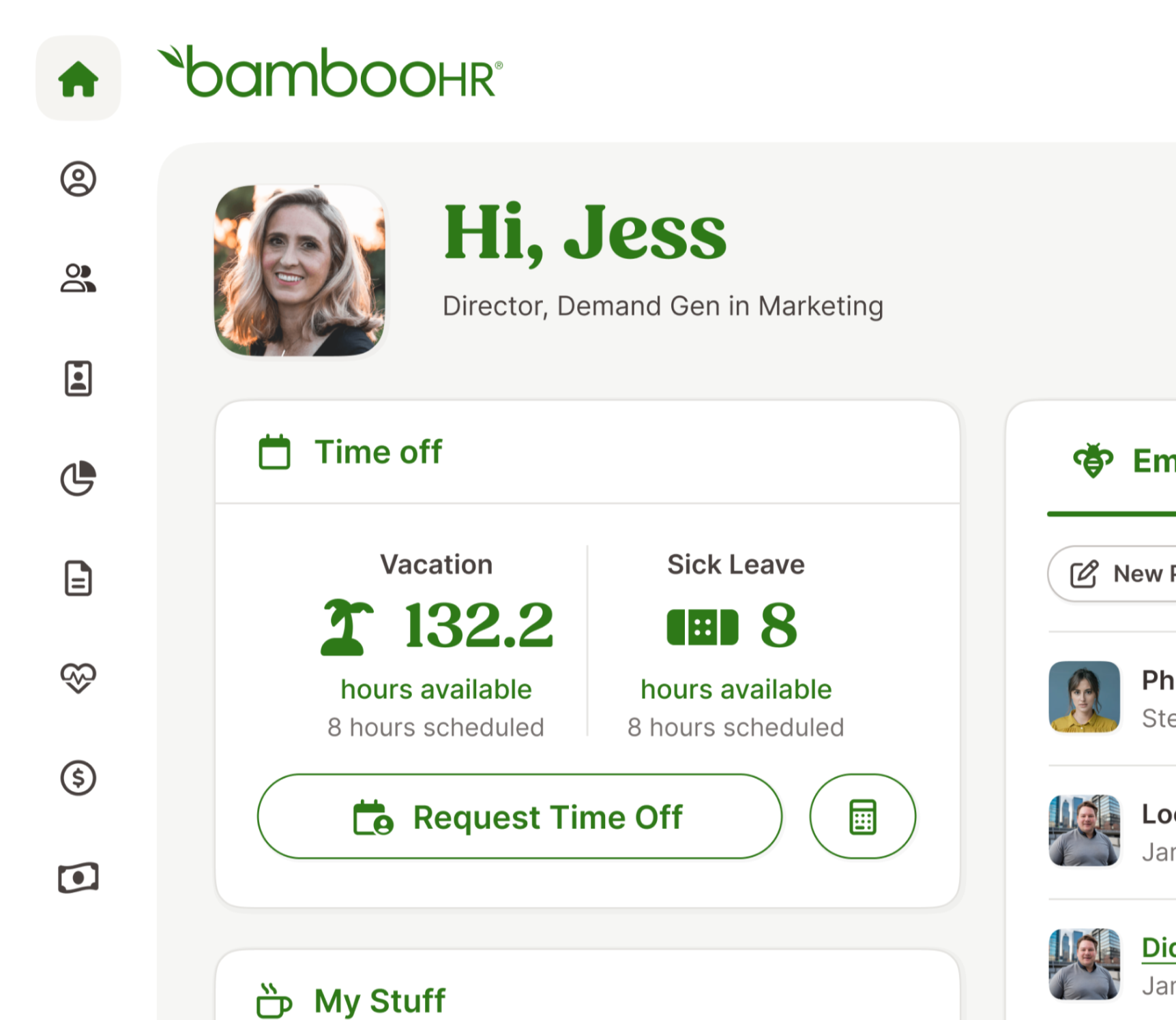
Time tracking that isn't soul sucking
Old-school time tracking software is, in a word, terrible. It's utilitarian, mundane, and very often inscrutable. I took a different approach.
BambooHR
There’s More Where That Came From
There's plenty more that I'd be glad to share. You know the drill, just reach out and let me know.

Portfolio / Fabric Design System
The Fabric of our lives
For a product as vast and deep as BambooHR, the lack of an established design system was a major problem. And creating one was a major undertaking.

The Backstory
As BambooHR scaled, the cracks in our design foundation began to show. In the early days, with just two designers, it was easy to stay in sync—patterns were informal, work was shared organically, and consistency came naturally. But as the team grew to 10+ designers (now bumping up against 30), this ad hoc “system” quickly broke down.Without standardized components or a shared source of truth, designers resorted to copying and pasting from outdated files. Design decisions were undocumented and repeatedly rehashed, leading to misalignment and mounting inefficiencies. Inevitably, these internal inconsistencies began to bleed into the product itself. Visual and UX inconsistencies crept in, and design debt began to snowball at an unsustainable pace.Decisions became arbitrary. Critique lost its footing. Quality suffered. Something had to change.
My Role
As Principal Product Designer, I created Fabric, our first formal design system, to bring order to the chaos and provide a scalable foundation for the future of BambooHR’s product design.This was a ground-up effort. I led the creation of every component in the system: from fundamentals like buttons, form fields, banners, and modals, to more complex patterns like tables, tabs, feedback messaging, and popovers. Each one was approached systematically: I audited existing implementations, identified patterns, resolved inconsistencies, and designed with both current needs and future flexibility in mind.I established foundational standards for typography, color, iconography, spacing, and interaction states, in addition to patterns for error messaging, navigation, and so much more.
The Components
The component library is the living, breathing heart of the design system. While it’s tough to capture the full scale of what was built in a few screenshots, I’ve included some examples to offer a glimpse into the depth and breadth of the work.

The Checkbox component from the Fabric library

The Button component from the Fabric library

The File Card component from the Fabric library

The Date Picker component from the Fabric library

The Action Tile component from the Fabric library


A sampling of screenshots from the Fabric component library in Figma (above).
Every component was thoughtfully designed, standardized, and documented to ensure consistency, usability, accessibility, and scalability. The component library became a go-to resource not just for designers and engineers, but for the entire product development org.To help ensure adoption, I put a ton of effort into evangelizing and publicizing Fabric. I led onboarding and training sessions for the design team, product managers, engineers, and QA. I made sure every team understood what the system was and why it mattered. I even presented the initiative at a company-wide all-hands meeting to highlight its strategic value and impact.I did everything I could to make it clear that Fabric wasn’t just a tool for designers. It was a shared foundation for everyone building at BambooHR.
The Documentation
To support the adoption and longevity of the Fabric design system, I built Weave, a centralized documentation site that brought clarity, structure, and guidance to our entire product organization.Weave became the connective tissue between design, engineering, and product. It housed everything from component usage guidelines and style specs to design philosophy and accessibility standards. Every element of Fabric was documented with intention:• What it is
• Why it exists
• When and how to use it
• And, crucially, how not to use itWeave helps make the system transparent and accessible to everyone. It helps new designers onboard faster, gives engineers the context they needed to implement accurately, and empowered our entire product development org to speak the same design language.

Intro page to Weave documentation site

Primitives documentation
Atomic Design documentation
Icon Button documentation


A sampling of screenshots from the Fabric documentation site, Weave
The Impact
Fabric became a shared language between design and engineering. It proved to reduce ambiguity, increase velocity, and enabled our team to scale without sacrificing quality. It didn’t just clean up the UI; it raised the bar for how we collaborate and build.What started as a response to growing pains evolved into a massive strategic asset for Bamboo. One that now underpins every product experience we deliver.
Ready for Another?
Thanks for stopping by. Take a look at another project below, or head on back to all projects.
Encore: a visual refresh with purpose
A company-wide effort to retire our aging UI, modernize the visual language, and bring the product back in sync with who we are.
BambooHR

Portfolio / Time Tracking
Time tracking that isn't soul sucking
In a world of stodgy and clunky time tracking software, I set off to create something refreshingly human and easy to use.
The Backstory
Traditional time management tools are built for admins and buyers, not the people who are actually using it. This is reflected in the experience of using them. They're pretty awful.Time tracking was a huge gap in our product offering, and this project provided an exciting opportunity for me to design it from the ground up in "The Bamboo Way." For us, that means reducing something down to its most essential parts, and reimagining it as a simplified user experience.
My Role
As principal designer, I worked with my trio (me, a product manager, and tech lead) to take this project from initial customer research to wireframes, prototype, validation, user testing, visual design, and shepherded it through implementation, working closely with development. I designed the full setup, time input, timesheet, and approval flows. This included logging and managing time from the BambooHR native mobile apps.
The Timesheet
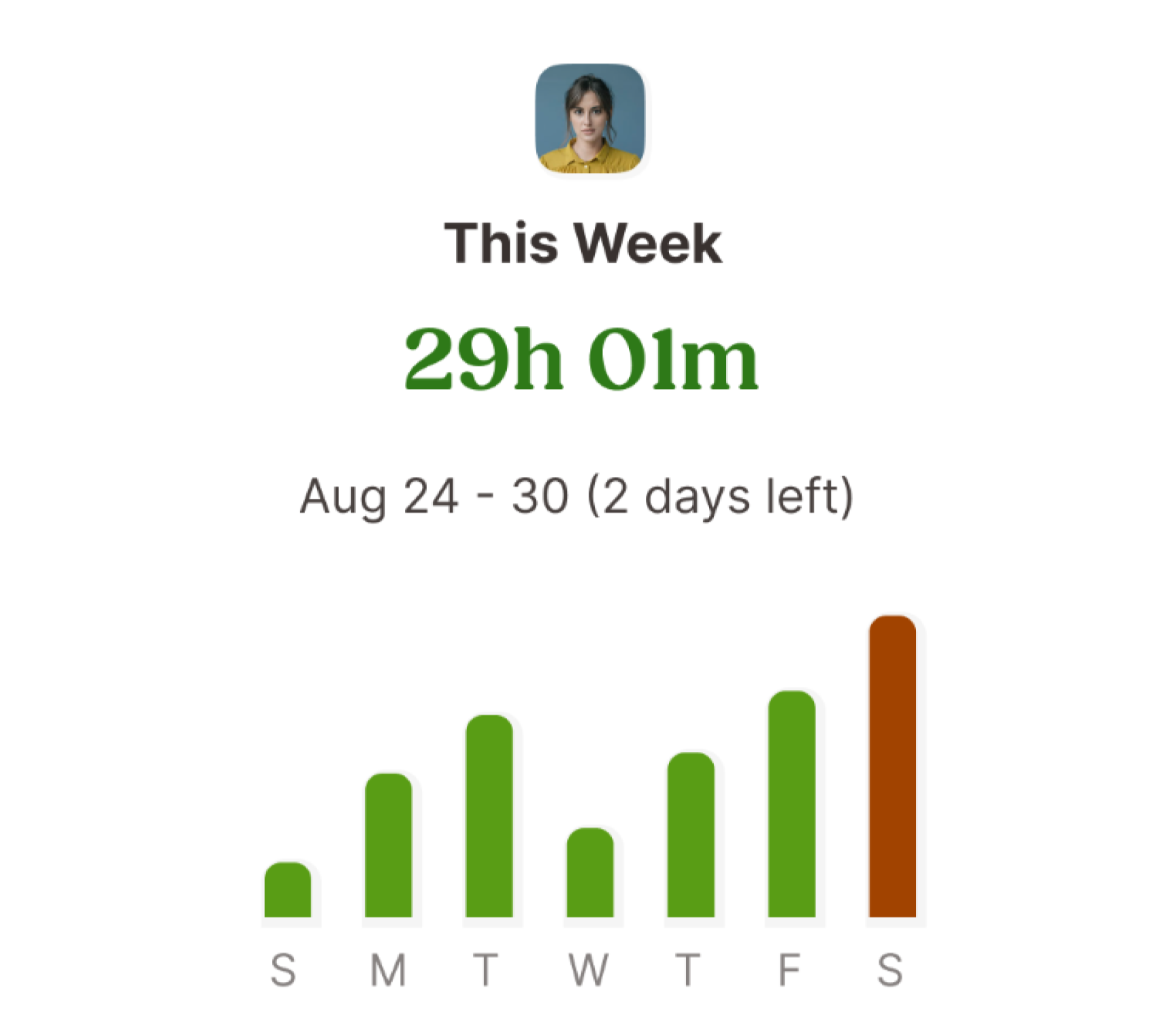
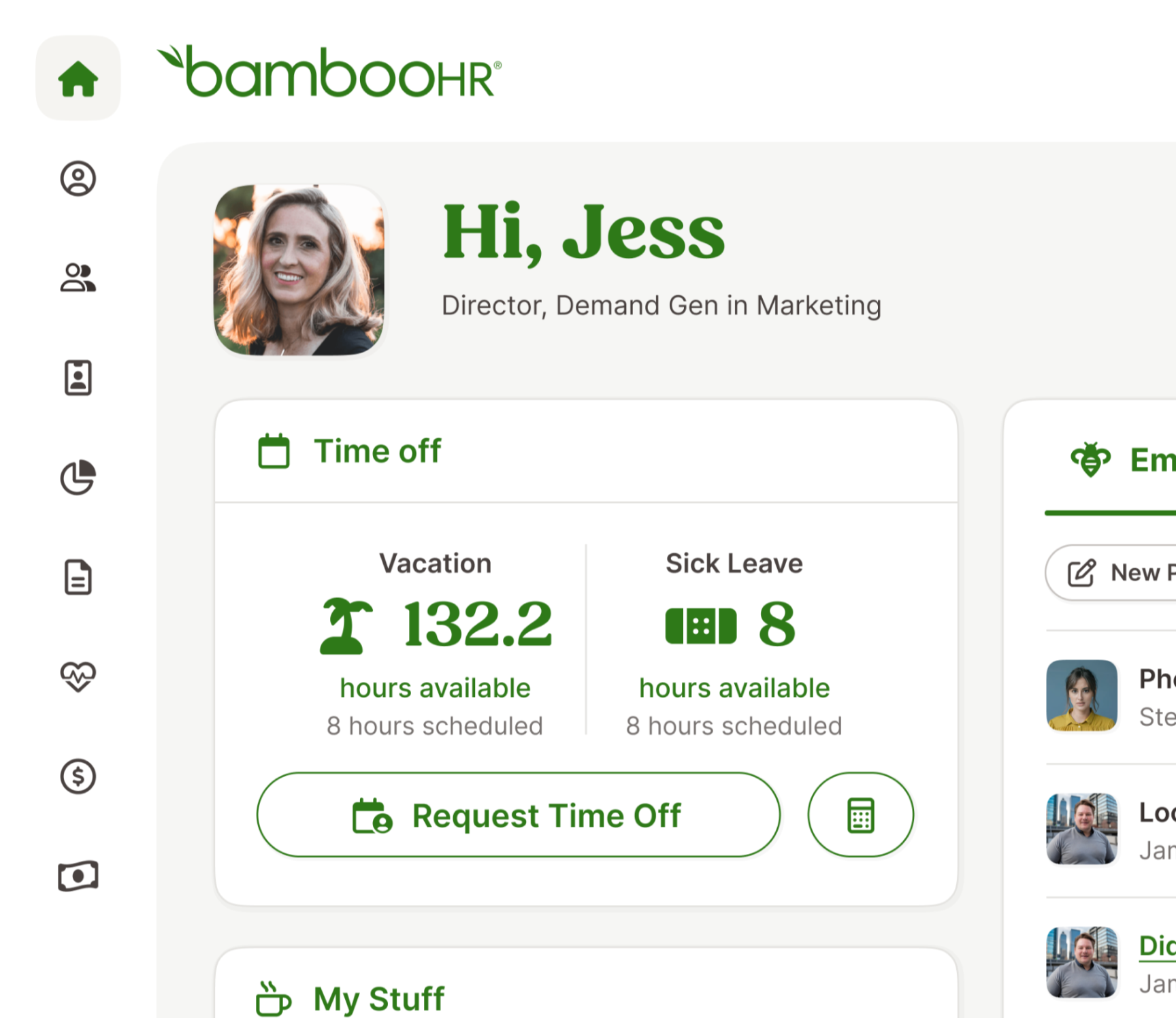
Traditionally, timesheets are more spreadsheet-like, difficult to parse and not at all engaging.I came up with a vertical layout, with the days ordered chronologically. The total time for each day is nice and big, and we show you your time range worked that day, from first clock in to last clock out.Clicking into a day reveals more detail for that day, including each individual time entry as well as any projects the time was logged against. Today is always automatically expanded.I also designed a widget for the home screen that allows you to clock in and out while providing a summary of time worked for both the day and week. Should you need to dig in further, it links off to your full timesheet.

Home screen Time Tracking widget

Timesheet tab on the Employee Profile

Several permutations of Home screen widget to account for multiple use cases

Several permutations of the right column of the timesheet to account for multiple use cases


A few example screens of Time Tracking on desktop (above).
Mobile Experience
Clocking in and out on your phone was an obvious primary use case that we needed to be sure was smooth and easy.I designed the full time tracking experience for mobile, including the timesheet, quick clock in and out, and even manager approvals.

Home Screen, showing clock in/out widget

Timesheet tab on the employee profile

Day detail view


A few example screens of Time Tracking on iOS (above).
Ready for Another?
Thanks for stopping by. Take a look at another project below, or head on back to all projects.
Our design system, built from the ground up. Beautiful, composable components, comprehensive documentation, and a solid foundation for greater speed, efficiency, consistency, and scalability.
BambooHR


Portfolio / Encore
Encore: a visual refresh with purpose
A monumental effort to modernize the visual language of a 15-year old product.
The Backstory
BambooHR had long been known as a standout in the HR software industry for its user experience and look and feel. And it’s true, for a long span of time BambooHR was in fact the leader in the industry. We went up against the likes of ancient juggaurnats like ADP, and we won every time.But, it became clear from our research efforts, both internally and externally, that we had rested on our laurels for too long, and an update was in order. So, I kicked off Project Encore.
My Role
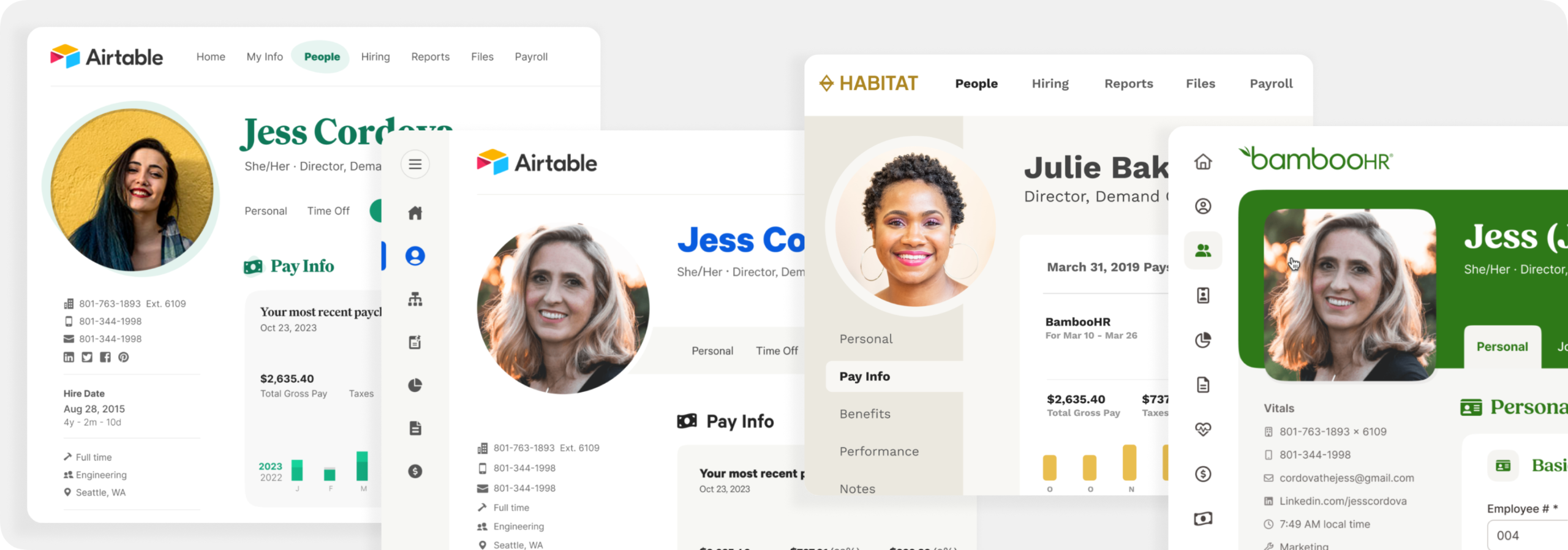
I led this large-scale visual redesign of our entire product—a cross-functional effort that touched every surface of the user experience. This was more than a UI refresh; it was a strategic initiative to modernize our visual language, improve consistency, and align the product with our evolving brand identity.From early concepting to final implementation, I was responsible for driving every aspect of the project. I kicked things off by leading initial research and discovery efforts, both internally and externally. As we came to have a better understanding of the problem, I put together a team of designers to begin prototyping different design concepts, a few of which are shown below.


A few of the design explorations we tested (above).
I led research on dozens of design iterations internally with stakeholders and externally with both current customers and non-customers. Research methods included both moderated and unmoderated preference testing and validation studies. It was so important to me that the new design direction not only felt fresh, modern, and clean, but also personified our brand while feeling human and trustworthy.One of the most challenging (and rewarding) aspects was securing stakeholder and executive alignment. I facilitated reviews, led a hands-on workshop with the executive team, and even presented to the entire company to make sure the value of the redesign was clearly understood across the org.


A sampling of results from preference testing and validation (above).
The Encore Design
Once we finalized on a direction, I worked closely with engineering and product leadership to shape the implementation plan. We worked through grooming and estimation to define scope, phasing, and impact on team roadmaps.As this updated design touched the entire product surface, I recruited design leads from each area to make sure design assets were available for engineering teams to begin cranking away.

Home
Report

Directory

Files
Employee Profile


A few screen examples of the final Encore visual design (above).
As work progressed, I partnered with our program manager to coordinate a release plan with product marketing, customer support, and our front-end engineering teams.While this project was an absolute beast, it also one of the most fulfilling projects I’ve led. It pushed my skills as a designer, leader, and partner across disciplines. And while it just launched recently, the early signals are positive, and the foundation it laid will support future product evolution for years to come.Read a blog post from Bamboo about the update.

A specimen of Fields, the font we chose to be our new headline font.

Visual elements were carefully crafted to convey a warm and friendly tone.


Ready for Another?
Thanks for stopping by. Take a look at another project below, or head on back to all projects.
Time tracking that isn't soul sucking
Old-school time tracking software is utilitarian, mundane, and very often inscrutable. I took a different approach.
BambooHR
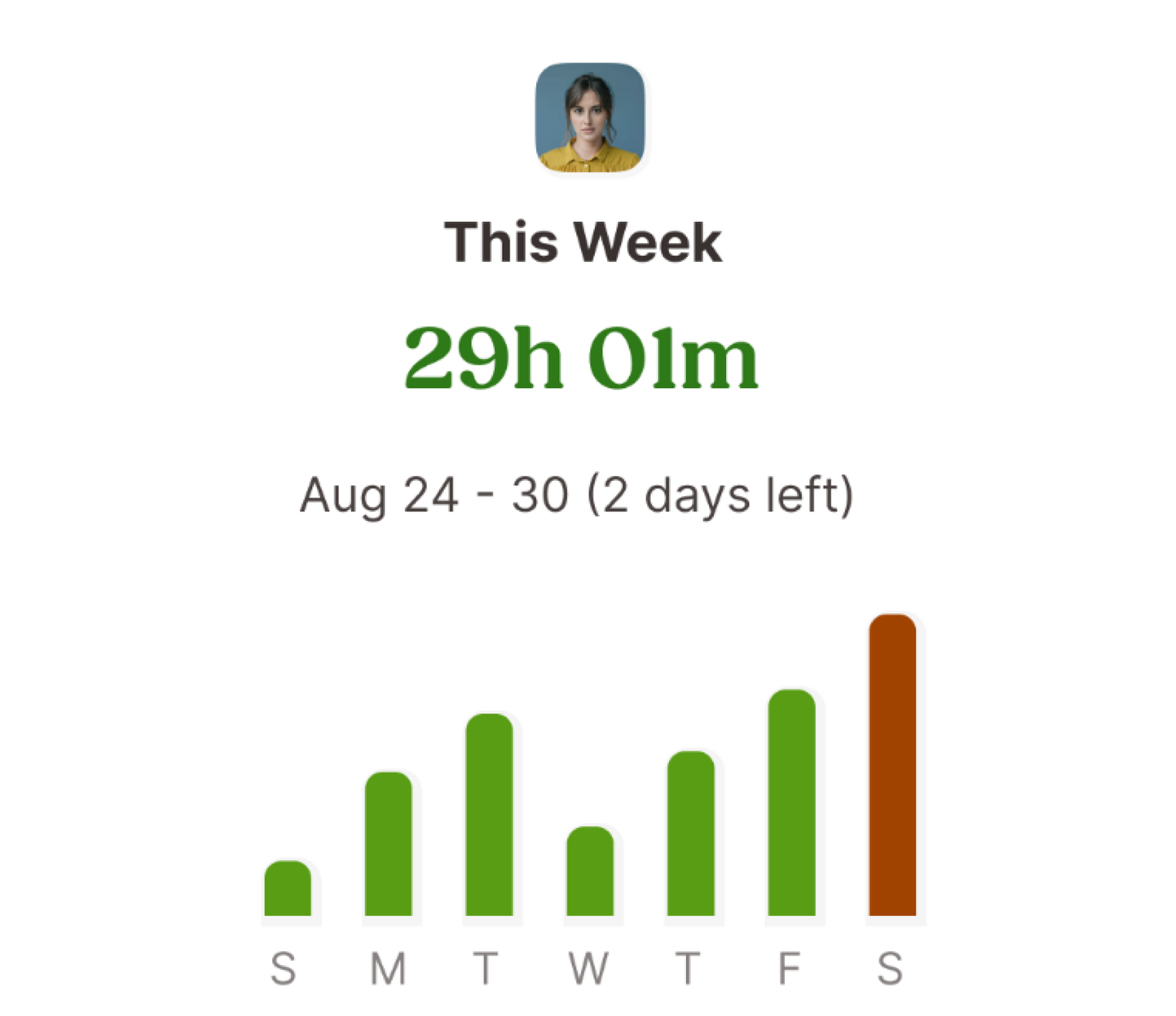

A brief summary of my design career
If you're looking for a glorified version of my LinkedIn, you came to the right place. Feel free to help yourself to a copy of my resumé if you'd like to as well.
BambooHR
Sr. Product Designer » Product Design Lead » Principal Product Designer » Director, Product Design – 10+ years
BambooHR builds online HR software for small and medium businesses. As principal product designer, I have been able to lead the design on a wide range of product initiatives and have a significant impact on product direction.As a "full stack" designer, I have led efforts from initial research with customers (including on-site contextual inquiry) to wireframes, low-fidelity prototypes, usability testing, high-fidelity visual design and finally to working closely with development to ensure everything was built to our standards (which were very high).
Amazon
User Experience Designer – 1 year, 2 months
I worked on the Amazon Family team, researching and designing the future of the Amazon Baby Registry and the Amazon Family program. While at Amazon I designed a responsive, mobile version of the baby registry, which is used by millions of expecting families to help prepare for their new arrival. Highlights included researching and creating a new version of Jumpstart, which provided an interactive checklist for new parents to better understand what they needed on their registry.
Workfront (acquired by Adobe)
Sr. User Experience Designer – 4 years, 10 months
As a part of the design team at Workfront (called AtTask while I was there), I was able to completely redefine the product direction. Through heavy research we realized the secret was to focus on individual contributors and their experience in the product. Before then, they were largely ignored in favor of the primary persona, project managers. As the a result the project manager experience was counter-intuitively made far worse.We completely redesigned the product with this in mind and formed the foundation for what lives today.
Omniture (acquired by Adobe)
User Experience Designer - Just 8 months (hey, I was young)
It was at Omniture (now Adobe) that I cut my teeth on the complexities of enterprise-level application design. I worked on what were at the time called SiteCatalyst and the behemoth Discover. As a young designer, I was granted opportunities to learn about the reality and importance of interaction design, prototyping (we used paper prototypes way back then), and user personas. It was here that I discovered and studied Cooper's user centered design method, which helped form the foundation of my interaction and visual design philosophy.
Product Design Consulting
I've been lucky enough to spend occasional nights and weekends working with some great companies to help to them build beautiful, simple, world-class software. I have a passion for what I do, and it doesn't suddenly turn off at 5:00 PM every day. Consulting work has served as a creative outlet for me, while continuing to allow me to refine my craft on a variety of different projects for both desktop and mobile.Have a project you'd like to discuss? By all means, get in touch.

Get in touch
If you'd like to see more of my work or just want to hello, I'd love to hear from you.